Execution Suite

Mind Maps Examples

Each example shows how a mind map turns a complex goal into clear branches that can be planned, discussed, and executed step by step.

These examples illustrate how each tool works and the type of thinking it supports. Actual outputs may vary based on your inputs and context.

Business startup mind map overview
Business startup mind map detailed branches
01

Business Startup Mind Map

Context: A founder maps the first version of a startup plan before building anything, so strategy, product, marketing, and revenue decisions stay connected from day one.

Map walkthrough: The central business concept branches into the problem being solved, the proposed solution, and the unique value to protect positioning. From there, the map expands into audience segments, their needs, and pain points, then moves into product decisions such as feature priorities, MVP boundaries, and roadmap phases. The final branches connect channel strategy, messaging, and acquisition with pricing choices, business model assumptions, and validation checkpoints measured through practical Tests and core performance indicators.

Career improvement mind map overview
Career improvement mind map detailed branches
02

Career Improvement Mind Map

Context: A professional uses a mind map to move from a broad career ambition to an actionable advancement plan with clear learning and opportunity paths.

Map walkthrough: The map starts with a target role and industry direction, then compares current capabilities against missing skills and sets a practical priority order. Learning branches capture courses, practice routines, and project work that close the most relevant gaps first. Experience planning then links current responsibilities and side projects to stronger portfolio evidence, while networking branches support events and online visibility. The final opportunity branch translates this groundwork into a focused job-search or promotion track with consistent follow-through.

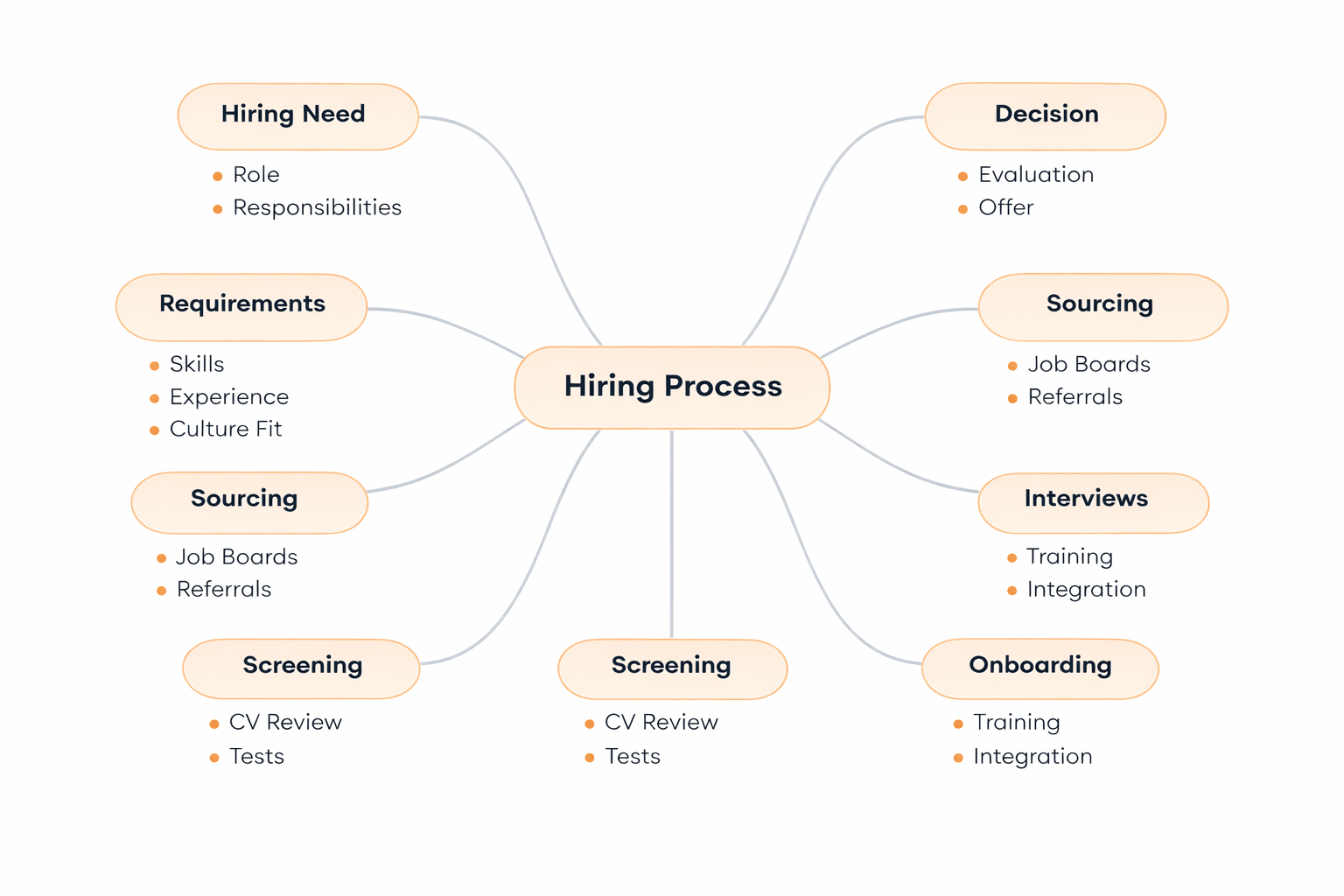
Hiring process mind map overview
Hiring process mind map detailed branches
03

Hiring New People Mind Map

Context: A growing team maps the entire hiring flow so role expectations, evaluation standards, and onboarding execution remain aligned across every hiring stage.

Map walkthrough: The map opens with a clear hiring need and role definition, then expands into responsibilities and requirement criteria that balance skills, practical experience, and culture alignment. Sourcing branches organize candidate channels such as job boards and referrals, while screening branches define how CV review and practical checks narrow the pool. Interview branches separate technical and behavioral evaluation so decisions are comparable, then the process closes with final assessment, offer structure, and onboarding branches focused on training and smooth team integration.